
Advancing research in rare conditions like DRPLA is only possible when people work together. The DRPLA Natural History and Biomarkers Study (NHBS) is a great example of how researchers, clinicians, families, and patient organizations across the world joined forces to help drive research forward.
The DRPLA NHBS aims to improve our understanding of DRPLA, including how symptoms develop and change over time. The study is also identifying biomarkers, measurable signs in the body that may help doctors track progression and, in the future, assess whether new treatments are working. Most importantly, the information collected through this study will help lay the foundations for future clinical trials. The study is supported by Ataxia UK and CureDRPLA, with funding provided by CureDRPLA.
Because DRPLA is an ultra-rare condition, recruiting enough participants has been one of the study’s greatest challenges. It is estimated that only 2 to 4 people per million are affected by DRPLA, meaning that finding volunteers requires an international effort.
The study collects health information over three years, with participants attending annual visits. During these visits, researchers carry out a range of assessments, including neurological examinations, ataxia rating scales, brain MRI scans, and blood sample collection. So far, 83 people with DRPLA and 57 people without DRPLA have been enrolled.
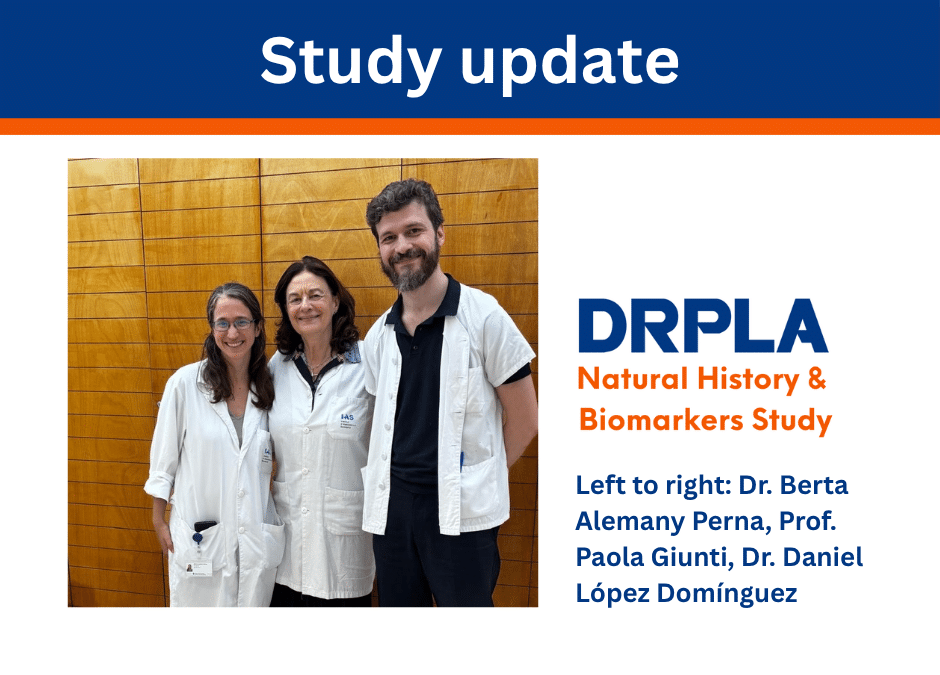
To reach people living with DRPLA around the world, the study team relied on the strong relationships between clinicians who care for people with rare neurological conditions. Prof Paola Giunti and Dr Hector Garcia-Moreno, based at University College London (UCL), contacted colleagues in different countries to identify potential participants and explore opportunities for collaboration. One successful partnership was established with Dr Berta Alemany Perna and Dr Daniel López Domínguez at Josep Trueta University Hospital in Girona and Santa Caterina Hospital in Salt, Spain.
Each year, the UCL team travels to Girona to work alongside the local clinicians and carry out study visits with participants. By assessing participants together and following the same procedures, the teams ensure that information is collected consistently, regardless of where participants are seen. This is important because it allows researchers to compare results across different locations with confidence.
The collaboration with Girona is just one example of the international network supporting this study. Similar partnerships have also been established in other regions of Spain, France, Wales, and South Korea. These collaborations have been essential in bringing together enough participants to make the study possible.
For rare diseases such as DRPLA, every participant and every collaborating clinician makes a difference. By working together across countries and healthcare systems, the research community can gather the knowledge needed to better understand DRPLA and accelerate the path towards future treatments.
We would like to extend our heartfelt thanks to all the individuals and families taking part in the study, as well as the healthcare professionals who contribute their time and expertise.